Introduction: A Familiar Promise
In 1978, millions of Iranians from leftists to nationalists to religious conservatives united behind a charismatic leader in exile who promised democracy and freedom. Ayatollah Ruhollah Khomeini, speaking from his residence in Neauphle-le-Chateau near Paris, assured the world that he sought no political power for himself. He would return to Qom, he said, to resume his role as a simple religious scholar. The revolution would belong to the people.
Within two years, Khomeini had crushed every faction that trusted him. The leftists were massacred. The nationalists were exiled. The liberal democrats who had served in his first government were sidelined or imprisoned. Iran's brief moment of revolutionary possibility collapsed into a theocratic dictatorship that has now lasted over four decades.
On August 1, 2025, another figure in exile unveiled another plan that asks Iranians to unite behind his leadership. Reza Pahlavi, the son of the deposed Shah Mohammad Reza Pahlavi, announced through the National Union for Democracy in Iran (NUFDI) a document titled "Iran: Emergency Phase—First 100 to 180 Days." The Iran Prosperity Project, as NUFDI calls it, presents itself as a roadmap for democratic transition.
But a careful examination of this document reveals structural features that should alarm anyone familiar with Iran's history. At its center sits a position called "Leader of the National Uprising" (رهبر خیزش ملی)—a role Pahlavi has claimed for himself—with powers that concentrate authority in ways that mirror, and in some respects exceed, the mechanisms Khomeini used to seize control in 1979.
Iran has already paid the price for trusting a charismatic leader who promised democracy. The question before Iranians today is whether they can afford to repeat that mistake.
The "Leader of National Uprising": A Blueprint for Concentrated Power
The document provided by NUFDI establishes a "Transitional System" (سامانه گذار) comprising three institutions: the National Uprising Body (نهاد خیزش ملی), the Transitional Government (دولت گذار), and the Transitional Court (دیوان گذار). On paper, this resembles a separation of powers. In practice, all three branches report to a single individual: the Leader of the National Uprising.
According to the document itself, "Appointment and dismissal of the heads of all three bodies will be done upon the proposal of the National Uprising Body... and with the approval of the Leader" (نصب و عزل رؤسای این نهادها نیز با پیشنهاد و با رأی اکثریت مطلق اعضای نهاد خیزش ملی و با تأیید رهبر خیزش ملی انجام میپذیرد). This single clause grants the Leader veto power over every major appointment in the transitional government.
The Free Iran Scholars Network, an independent research organization, analyzed the document and concluded that it grants "absolute appointment authority" to the Leader, with "no separation of powers" in any meaningful sense. Dr. Majid Rafizadeh, a Harvard-educated political scientist who authored the analysis, noted that "all three branches require Leader approval for key decisions."
The Miami Independent reached similar conclusions, describing the proposal as offering "no elections, no checks and balances, and no independent judiciary." The Chief Judge of the Transitional Court would be "nominated by legislature, confirmed by the leader personally."
This concentration of power in a single individual's hands is not a democratic transition—it is the scaffolding of authoritarian rule. The very structure that made Khomeini's power grab possible in 1979 is being proposed again, with updated terminology but identical mechanisms.
Just as Khomeini positioned himself as Supreme Leader with ultimate authority over all branches of government, Pahlavi's document positions the "Leader of National Uprising" as the final arbiter of all transitional institutions. The parallel is not subtle; it is structural.
No Checks, No Balances: The Structural Flaws
Beyond the concentration of appointment powers, the document contains additional provisions that raise serious concerns about democratic accountability.
The Indefinitely Extendable Transition Period
The proposed transition period spans 18 to 36 months. But crucially, this period can be extended—and the extension mechanisms are controlled by the very individuals who would benefit from remaining in power. According to Section 17.1 of the document, "Any extension beyond six months requires approval of three entities (National Uprising Body, Transitional Government, and Transitional Court) AND approval of the Leader of National Uprising."
As the Middle East Forum observed: "At the heart of the proposal lies an 18- to 36-month 'Transitional Period,' which can be extended indefinitely. During this time, all branches of state authority would report to one man."
This creates a structural incentive for perpetuating the "transitional" phase. When those in power control the mechanisms for extending that power, transitions tend not to end.
No Elections During Transition
Perhaps most critically, the document provides no mechanism for democratic elections during the entire transitional period. The members of the National Uprising Body would be drawn from Pahlavi's existing supporters, not elected by the Iranian people. The Transitional Government would be appointed, not elected. The judiciary would be confirmed by the Leader.
For a minimum of 18 months—and potentially much longer—Iranians would live under a government they did not choose, led by officials accountable only to one man.
Martial Law and Security Force Preservation
The document authorizes martial law in 20 designated "high-risk" cities, with special units reporting directly to the transitional authority—meaning, ultimately, to the Leader. More troubling still, the plan proposes retaining the Ministry of Intelligence, IRGC personnel, and anti-riot forces for "crowd control" purposes.
The very security apparatus that has brutalized Iranians for decades would be preserved, merely transferred to new leadership. The Jerusalem Post analysis noted that the plan "tries to recreate the power structures of the Islamic Republic," raising questions about whether this represents genuine change or merely a change of management.
The False Promise of Unity
Proponents of Pahlavi's plan argue that opposition unity requires a central figure around whom Iranians can rally. The document is presented as a framework for collective action, a way to coordinate disparate factions against the Islamic Republic.
But this argument fundamentally misunderstands what democratic unity means. Unity around principles—human rights, free elections, separation of powers, rule of law—is the foundation of democratic movements. Unity around a single individual, particularly one claiming extraordinary powers during a "transitional" period with no clear endpoint, is the foundation of personality cults and authoritarian consolidation.
The record shows that many opposition groups have explicitly rejected this framework.
Maryam Rajavi, president-elect of the National Council of Resistance of Iran (NCRI), stated in June 2025 that an alternative government cannot be "imposed from above, as was done a century ago when Britain installed a monarchy by appointment." The NCRI, despite its own controversial history, accurately identifies the core problem: legitimate governance requires popular consent, not imposition by external powers or self-appointed leaders.
Polling data reveals that Pahlavi's support is far from universal. While he commands significant backing in some regions—peaking at 42% in Gilan province—his support in Kurdish and Azeri regions falls below 20%. Iran's diverse ethnic and national minorities, who have historically suffered under centralized Persian-dominated governance, see little reason to trade one form of exclusion for another.
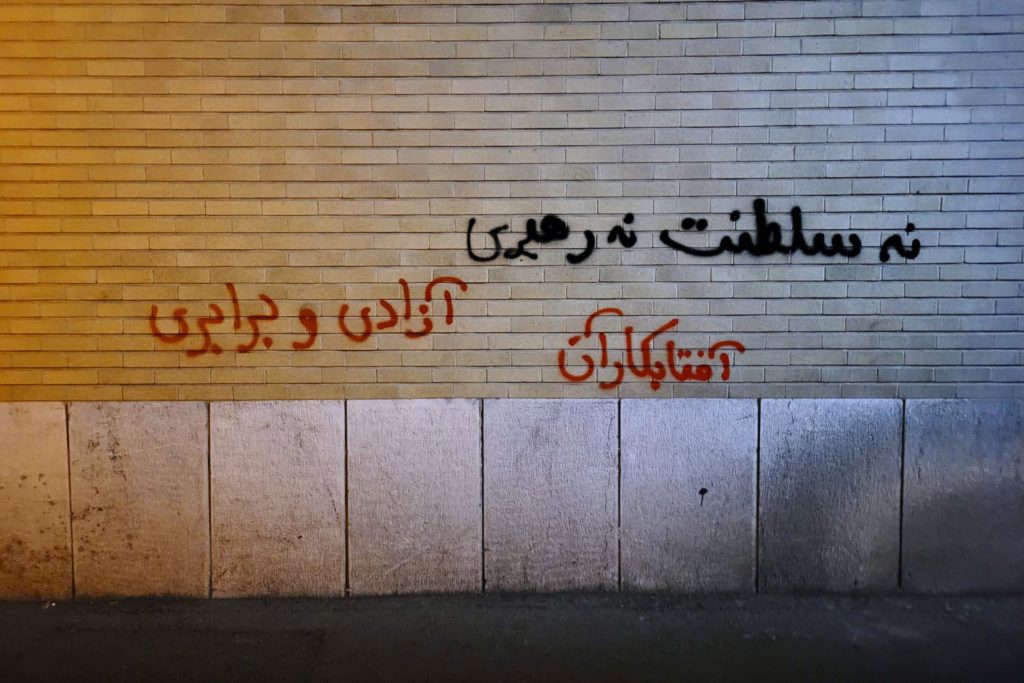
The emergence of protest chants declaring "Neither Shah nor clergy" (نه شاه، نه شیخ) during recent demonstrations suggests that many Iranians reject both the Islamic Republic and a Pahlavi restoration. As Al Jazeera reported, "The appearance of pro-Pahlavi slogans at some protests doesn't indicate widespread monarchist sentiment; it reflects nostalgia for pre-revolutionary stability, artificially amplified by social media campaigns."
Even within monarchist circles, the plan has generated criticism. The Jerusalem Post noted that NUFDI demonstrates "a problematic attitude: demanding unquestioned allegiance, stifling dissent, and making poor advisory choices" that has "fragmented many initiatives" over 12 years.
In 1979, diverse groups were told that unity behind Khomeini was necessary to overthrow the Shah. Critics were dismissed as divisive, as agents of the monarchy, as obstacles to liberation. That "unity" delivered four decades of theocracy.
Today, critics of Pahlavi's plan are similarly dismissed—as MEK trolls, as regime agents, as obstacles to progress. But the structural concerns they raise deserve serious engagement, not ad hominem attacks. A plan that concentrates power in one person's hands is not a plan for democracy, regardless of that person's stated intentions.
The 1979 Playbook: How Khomeini Betrayed a Revolution
To understand why Pahlavi's proposal should alarm Iranians, it is essential to understand exactly how Khomeini's betrayal unfolded. The mechanisms he used to transform revolutionary hope into authoritarian reality provide a template for recognizing similar dangers today.
The Promises (1977-1979)
In his interviews from Paris, Khomeini presented himself as a champion of freedom. As the PMOI documented, "In his initial interviews and speeches in Paris before the revolution, Khomeini emphasized freedom and democracy. During this period, by claiming neutrality toward various political groups and promising the establishment of a democratic government, he gained the trust of large segments of the people and political organizations."
Khomeini was careful never to detail exactly what an "Islamic Republic" would look like. He spoke in generalities about justice, independence, and freedom from tyranny. He allowed each faction—leftists, nationalists, liberals, even secular intellectuals—to project their own aspirations onto his leadership.
The Middle East Theater academic analysis observed that Khomeini kept his plans "purposefully vague in order to galvanize the maximum amount of support for his cause." This strategic ambiguity allowed him to build a coalition that would have been impossible had he clearly articulated his vision of clerical rule.
The Coalition That Trusted Him
The breadth of the coalition that united behind Khomeini demonstrates how effectively he obscured his true intentions:
- Leftist groups including the Tudeh Party and Fedayeen saw the revolution as a step toward socialism
- Nationalists from the National Front hoped to restore the democratic aspirations of the Mossadegh era
- Liberal democrats like Mehdi Bazargan's Liberation Movement sought a constitutional republic
- Progressive clerics believed religious values could coexist with democratic governance
- Even Marxist-Islamic groups like the MEK/PMOI initially supported the revolutionary coalition
All of these groups believed that Khomeini would serve as a spiritual figurehead while they competed democratically for political power. They were catastrophically wrong.
The Betrayal (1979-1981)
The mechanisms of Khomeini's power consolidation should be studied by every Iranian considering whether to trust another promise of democratic transition:
February 1979: Khomeini returns to Iran to millions of supporters. He immediately establishes the Revolutionary Council—an appointed body of loyalists that parallels exactly what Pahlavi now proposes as the "National Uprising Body."
March 1979: A referendum offers Iranians only one choice: "Islamic Republic—Yes or No." There is no alternative model on the ballot, no competing visions to choose from. The referendum legitimizes a structure whose details remain undefined.
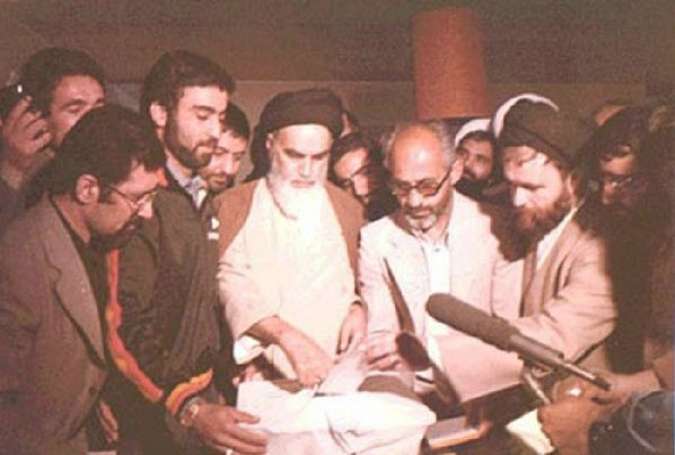
April-October 1979: Khomeini appoints the moderate Mehdi Bazargan as Prime Minister. This provides a veneer of democratic legitimacy while Khomeini's loyalists consolidate control over revolutionary institutions, the military, and the media.
November 1979: The hostage crisis at the U.S. Embassy, orchestrated by radical students with Khomeini's blessing, creates a permanent state of emergency. Bazargan resigns in protest, removing the last democratic fig leaf from the regime.
December 1979: The Islamic Constitution is ratified, institutionalizing the Supreme Leader position with authority over all branches of government—exactly the structure Khomeini had denied seeking.
1980-1981: Systematic elimination of all opposition groups. The Tudeh Party is crushed. The National Front is marginalized. The MEK is driven underground. Progressive clerics who question Khomeini's authority are silenced. By 1981, thousands have been executed, imprisoned, or exiled.
"Khomeini gradually removed his mask and took actions that bore no resemblance to his initial promises."
The Structural Parallels
The similarities between Khomeini's 1979 playbook and Pahlavi's 2025 proposal are not coincidental—they reflect the inherent logic of power concentration:
| 1979 Khomeini | 2025 Pahlavi |
|---|---|
| Revolutionary Council (appointed by Khomeini) | National Uprising Body (members from Pahlavi supporters) |
| Supreme Leader position | Leader of National Uprising |
| Referendum with single option | Referendum after Leader already holds power |
| Revolutionary Guards (IRGC) created | Existing security forces preserved, reporting to Leader |
| "Transitional" government → permanent dictatorship | 18-36 month transition → indefinitely extendable |
The Revolutionary Council was presented as a temporary coordinating body; it became the mechanism for centralizing power. The National Uprising Body would serve an identical function.
The Supreme Leader position was justified as necessary for guiding the transition; it became permanent autocracy. The Leader of National Uprising position contains the same structural potential.
Those who do not learn from history are condemned to repeat it. Iran is being offered the same playbook with different names.
Who Wrote This Document?
Understanding who authored the transitional plan reveals important information about its origins, perspectives, and blind spots.
According to the NUFDI Team page, the document was produced by the Iran Prosperity Project under the guidance of Reza Pahlavi. The named contributors include:
Project Management:
- Ahmad Eshghyar
- Amir Sharif-Emami
Authors:
- Siamak Javadi, Ph.D. (Banking and Financial Markets) - Associate Professor at University of Texas Rio Grande Valley
- Mohammad R. Jahan-Parvar, Ph.D. (Budget)
- Saeed Ghasseminejad, Ph.D. (Budget)
- Payam Alipour (Pension and Healthcare)
Security Advisors:
- Eyal Hulata (former Israeli National Security Advisor)
- Behnam Taleblu
Several observations emerge from this list.
First, the contributors are overwhelmingly diaspora-based academics and professionals with limited organizational presence inside Iran. NUFDI describes them as "senior economic advisors for major DC-based think tanks, principal economists on the Federal Reserve Board, and academics at several universities across the country." These credentials are impressive, but they do not translate into grassroots political organization within Iran itself.
A 2009 Brookings Institution report noted that Pahlavi lacked an "organized following" because there was no serious "monarchist movement" inside the country. More than fifteen years later, as the Free Iran Scholars Network documented, "no major civil society organizations, labor unions, or student movements inside Iran have endorsed Pahlavi."
Second, the inclusion of foreign nationals in security advisory roles—including a former Israeli National Security Advisor—raises questions about whose interests the transitional security apparatus would serve. Iran's complex geopolitical position requires security decisions made by Iranians accountable to Iranians, not by foreign advisors with their own national interests.
Third, and perhaps most critically, the contributor list reveals no representation from Iran's ethnic minorities, labor movements, civil society organizations, or women's rights advocates. A transitional plan authored primarily by Persian diaspora professionals cannot claim to represent the aspirations of Kurds, Baluchis, Arabs, Azeris, and other communities who comprise nearly half of Iran's population.
Why Trust Cannot Be Placed in This Framework
Beyond the structural concerns and the historical parallels, Pahlavi's personal record raises additional questions about whether he can be trusted with the extraordinary powers his plan demands.
A Track Record of Failed Initiatives
Over 47 years in exile, Pahlavi has launched approximately twelve major political initiatives, according to the Free Iran Scholars Network's documentation. These include the Iran National Council, the Alliance for Democracy and Freedom in Iran, and the Strike Fund for Iranian Workers. All have collapsed due to what critics describe as "poor structure, lack of transparency, and minimal follow-through."
The Strike Fund is particularly illustrative. Launched to support workers inside Iran, it collected donations without establishing clear infrastructure, disbursement mechanisms, or public accounting. No explanation has been provided regarding how the funds were allocated.
Contradictory Positions
Pahlavi has repeatedly contradicted himself on fundamental questions. At times he claims to prefer a republic; at others he defends "elective monarchy." He has avoided clear positions on whether he seeks actual power or merely a symbolic role. This strategic ambiguity mirrors Khomeini's pre-revolutionary vagueness—and should inspire similar skepticism.
Passivity During Critical Moments
During the 2022-2023 Woman, Life, Freedom uprising following the death of Mahsa Jina Amini, Pahlavi failed to lead or inspire effective action. The Free Iran Scholars Network documented that he "discouraged street protests, suggesting instead that 'change doesn't require visibility' and advocating staying home." This contradicted the energy of actual resistance movements inside Iran who were risking their lives in the streets.
Regime Analysis
Perhaps most damningly, even the Islamic Republic's own strategists view Pahlavi's movement as unthreatening. A February 2025 article in the regime-controlled Vatan Emrouz described monarchism as a "rootless movement" that ultimately benefits the Islamic Republic by "diverting opposition energy into harmless channels." Regime strategist Mohsen Raddadi wrote that "by dividing the opposition and posing no real threat, Reza Pahlavi's movement has rendered a 'service' to the Islamic Republic unmatched by any other organization."
When your enemies consider you useful, it is worth asking whether your strategy serves their interests more than your stated goals.
Conclusion: History's Warning
In 1979, Iranians were asked to trust. They trusted a leader who promised democracy while building the machinery of dictatorship. They paid for that trust with forty-six years of theocratic oppression—and counting.
In 2025, Iranians are again being asked to trust. They are asked to accept a "Leader of National Uprising" with power to appoint and dismiss officials across all branches of transitional government. They are asked to accept a transition period of indefinite length with no elections. They are asked to accept the preservation of security forces that have brutalized them for decades.
The structural features are identical to 1979: concentrated power, no meaningful accountability, extendable timelines, leader-controlled institutions. The promises sound similar: democracy will come eventually, trust the process, unity is necessary.
The question Iranians must ask themselves is this: If Khomeini—who had spent decades as a religious scholar with a clear ideology and extensive networks inside Iran—could deceive millions, why should Pahlavi—who has spent 47 years in exile without building any grassroots organization—be trusted with even greater powers?
The lesson of 1979 is not that Iranians should not seek change. The Iranian people's desire for freedom and dignity is legitimate and powerful. The protests of 2022-2023 demonstrated that millions are willing to risk their lives for a better future.
The lesson of 1979 is that the structure of transition matters as much as the intentions claimed. True democratic transition requires:
- Institutions accountable to the people from day one
- Elections as the starting point, not a distant promise
- No single individual holding appointment powers over all branches
- Representation for Iran's diverse ethnic and political communities
- Civilian oversight of security forces, not their preservation under new management
Iran deserves better than a choice between theocratic tyranny and monarchist nostalgia. Iran deserves democratic institutions built on genuine popular sovereignty, not another charismatic leader asking for trust.
A document that concentrates power in one person's hands is not a roadmap to democracy—it is the scaffolding of dictatorship. Iran cannot afford to learn the lesson of 1979 twice.
Sources
- Free Iran Scholars Network: Reza Pahlavi's Platform—A Roadmap to Neo-fascist Rule
- Free Iran Scholars Network: Behind the Crown—A Documented Critique
- Miami Independent: Reza Pahlavi's Transition Plan—A Blueprint for Authoritarian Rule
- Jerusalem Post: The Failure of Iran Opposition's Proposed Transition Plan
- Middle East Forum: Iran's Opposition Debates New Plan for Post-Islamic Republic Era
- PMOI: How Khomeini Hijacked Iran's 1979 Revolution
- Middle East Theater: The 1979 Revolution of Iran—How Khomeini Thwarted Reform
- NUFDI: Iran Prosperity Project Team
- Al Jazeera: Son of Former Shah Loses Credibility After Justifying Israel's War on Iran
- Kar Online: Emergency Phase Notebook—An Ineffective Prescription
- Worker-Communist Party of Iran: Analysis of the Emergency Phase Document